Brakes
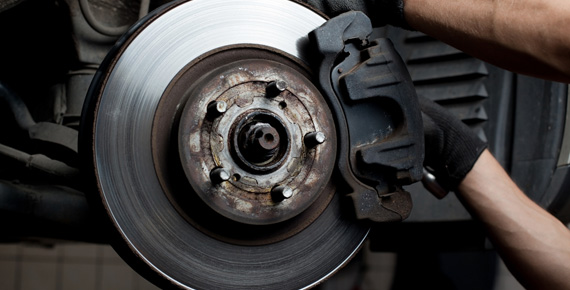
Just as your gas mileage will vary depending on where and how you drive, so it goes with the life of brake pads (or linings), the friction material that gets pressed against a metal disc or drum to stop your vehicle.
If you drive only 8,000 miles a year but it's mainly in a crowded urban area such as Chicago, Boston or Dallas, you will need to replace brake pads more often than someone who drives 28,000 miles a year across the flatlands of Nebraska. You use your brakes a lot more in urban driving than on a rural highway.
Unfortunately, there is no clear-cut schedule that tells you when it's time to replace the brakes, so you need to rely on the advice of an experienced automotive technician. A mechanic can check the thickness of the pads and the condition of the brake hardware to spot wear.
Many cars have built-in wear sensors that scrape against a brake disc when the linings needed replacing. The driver will hear an annoying screeching sound when they apply the brakes (or when the brakes are released on some vehicles).
Those sensors aren't on every vehicle, so drivers should listen for squeaks, squeals, grinding (often a sign that brake pads are entirely gone) and other noises that indicate wear. Some minor noises can be eliminated by cleaning the brakes, but persistent, prominent noises usually mean parts are worn. Other signs are pulsations through the brake pedal, longer stopping distances, or when you apply the brakes your foot goes down further, closer to the floor. Because brake linings wear gradually, you may not notice the demise in performance, so that's where the experienced eye of a mechanic can help.
All cars have a brake warning light that comes on for a few seconds every time you start your car. If it comes on while driving, that probably means your brake system is low on fluid because of a leak or a problem with the brake master cylinder. Note that this is not the same warning light that comes on when you apply the hand- or foot-operated parking brake. All cars and light trucks also have front disc brakes. Most have rear discs, as well, though some cars still come with rear drum brakes.
If you drive only 8,000 miles a year but it's mainly in a crowded urban area such as Chicago, Boston or Dallas, you will need to replace brake pads more often than someone who drives 28,000 miles a year across the flatlands of Nebraska. You use your brakes a lot more in urban driving than on a rural highway.
Unfortunately, there is no clear-cut schedule that tells you when it's time to replace the brakes, so you need to rely on the advice of an experienced automotive technician. A mechanic can check the thickness of the pads and the condition of the brake hardware to spot wear.
Many cars have built-in wear sensors that scrape against a brake disc when the linings needed replacing. The driver will hear an annoying screeching sound when they apply the brakes (or when the brakes are released on some vehicles).
Those sensors aren't on every vehicle, so drivers should listen for squeaks, squeals, grinding (often a sign that brake pads are entirely gone) and other noises that indicate wear. Some minor noises can be eliminated by cleaning the brakes, but persistent, prominent noises usually mean parts are worn. Other signs are pulsations through the brake pedal, longer stopping distances, or when you apply the brakes your foot goes down further, closer to the floor. Because brake linings wear gradually, you may not notice the demise in performance, so that's where the experienced eye of a mechanic can help.
All cars have a brake warning light that comes on for a few seconds every time you start your car. If it comes on while driving, that probably means your brake system is low on fluid because of a leak or a problem with the brake master cylinder. Note that this is not the same warning light that comes on when you apply the hand- or foot-operated parking brake. All cars and light trucks also have front disc brakes. Most have rear discs, as well, though some cars still come with rear drum brakes.